
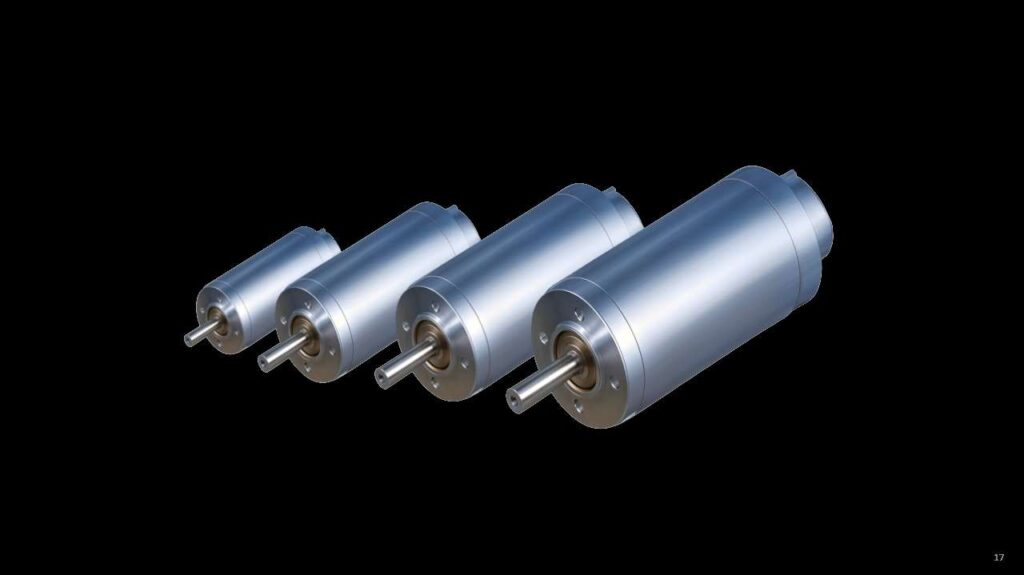
Brushless DC (BLDC) motors are integral to modern automation and robotics, offering high efficiency, long life, and low maintenance. Selecting the right BLDC motor requires understanding specific technical features that affect performance and suitability for your application. This article delves deeper into the technical aspects of BLDC motors, including essential equations and performance metrics to consider.
BLDC motors operate without brushes, using an electronic commutation system that enhances their reliability and reduces maintenance. These motors are highly efficient, providing precise control of speed and position, which is crucial for applications ranging from electric vehicles to industrial automation systems.
Key Features to Compare When Selecting BLDC Motors
Motor Specifications
- Power Output (P): Measured in watts (W), it indicates the motor’s capability to perform work over time. The power requirement is calculated based on the load and speed:
Where τ is torque (Nm) and ω is angular speed (radians per second).

- Voltage Requirements (V): Ensure the motor’s voltage rating matches your system’s power supply to maintain efficiency and performance.
- Speed Range (N): Defined in revolutions per minute (RPM). It’s critical that the motor supports the operational speed range of your application.
Torque Characteristics
- Torque Output (τ): Essential for determining how well the motor can handle loads. Higher torque is required for heavier loads.
- Torque-to-Inertia Ratio: This ratio affects how quickly the motor can change speed, which is vital for dynamic applications:

Efficiency and Heat Management
- Energy Efficiency (η): A higher efficiency rating means the motor converts a greater portion of electrical energy into mechanical energy, reducing operational costs.
- Thermal Properties: BLDC motors typically have an efficiency rating (η) of 85-90%. Thermal resistance and cooling methods are crucial to prevent overheating.
Physical Dimensions and Integration
- Size and Weight: Smaller motors reduce the overall weight of the application, improving system efficiency and performance.
- Mounting Options: Compatibility with existing systems ensures seamless integration.
Durability and Reliability
- Construction Quality: Motors should be rated for environmental conditions like temperature and humidity.
- Life Expectancy: Typically, BLDC motors have a lifespan of thousands of hours, depending on operational conditions.
Control and Connectivity
- Sensor Integration: Sensors for detecting rotor position are crucial for precise control. Hall effect sensors are commonly used for this purpose.
- Communication Interfaces: Ensure the motor is compatible with digital controllers, which may use protocols like serial, CAN bus or Modbus for communication.
Selecting a BLDC motor involves a balance of technical specifications, performance requirements, and operational conditions. Understanding these fundamental aspects ensures you choose a motor that enhances efficiency, reliability, and control in your applications.
مرحبًا، هذا تعليق.
للبدء بالإشراف، التحرير، وحذف التعليقات، من فضلك قم بزيارة شاشة التعليقات في لوحة التحكم.
صورة المُعلق تأتي من Gravatar.